
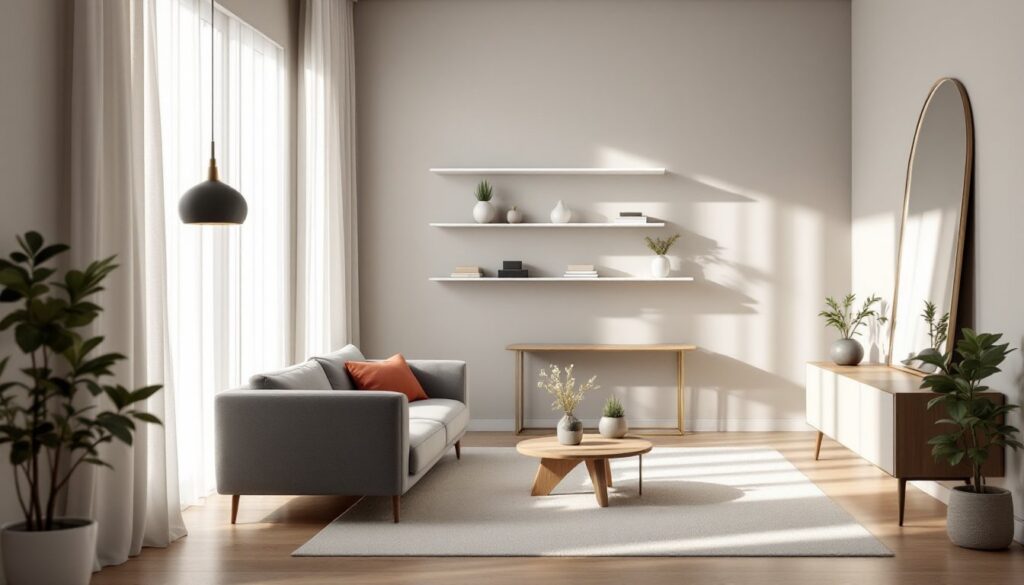
Modern apartment interior design has evolved beyond minimalist trends into a balanced approach that merges aesthetics with practical living. Today’s apartment dwellers face the challenge of making limited square footage work harder, without sacrificing comfort or style. Whether someone is decorating a studio in an urban core or furnishing a one-bedroom urban space, smart design choices can transform any apartment into a sophisticated, livable environment. The key isn’t about following Instagram-perfect rules: it’s about understanding principles that make small spaces feel open, organized, and genuinely enjoyable to live in daily.
Key Takeaways
- Modern apartment interior design balances aesthetics with practicality by using intentional design choices that maximize limited square footage without sacrificing comfort.
- Clean lines, minimal clutter, and strategic negative space are core principles of modern design that make small apartments feel larger and more organized.
- A cohesive color palette built on a neutral base with 2-3 accent colors creates visual harmony and prevents small spaces from feeling psychologically cramped.
- Vertical storage solutions, multi-functional furniture, and built-in storage are essential for keeping modern apartments organized while maintaining a streamlined aesthetic.
- Layered lighting with ambient, task, and accent components, combined with warm color temperatures and dimmers, transforms how spacious and welcoming an apartment feels.
- Strategic placement of mirrors, floating furniture, and clear sightlines enhance perceived spaciousness and create flow in modern apartment layouts.
Understanding Modern Design Principles for Small Spaces
Modern interior design for apartments rests on a foundation of intentionality. Every piece serves a purpose, and every visual element contributes to overall harmony. Small spaces demand restraint, not because minimalism is trendy, but because clutter creates psychological weight and makes rooms feel cramped.
The first principle is spatial awareness. Rather than fighting against a room’s dimensions, modern design works with them. This means understanding scale: oversized furniture in a small bedroom overwhelms the space, while tiny furnishings can make it feel sparse and disconnected. A queen bed works better than a king in most apartments: a compact sofa with clean lines visually “disappears” better than a sectional.
The second principle is intentional negative space. Modern apartments leave breathing room between objects. This isn’t emptiness for its own sake, it’s strategic white space (or wall space) that lets the eye rest and creates flow. Cramming every corner signals chaos: leaving some surfaces clear signals control and calm.
The Role of Minimalism and Clean Lines
Minimalism in modern apartment design means removing the unnecessary, not living in a sparse void. Clean lines, straight edges, geometric forms, low-profile furniture, are the visual language of contemporary spaces. They create visual continuity and make rooms feel larger because they don’t interrupt sight lines.
Practically, clean-lined furniture (a bed with a simple platform base rather than decorative posts, a sofa without ornate arms) fits better in tight corners and against walls. Shelving with clean edges and horizontal lines draws the eye across the room rather than up and down, which subtly makes ceilings feel higher.
Abstain from ornate details and heavy textures unless they’re intentional focal points. A single statement piece, a textured accent wall, an art piece, a sculptural lamp, reads as intentional design. Five scattered decorative items read as clutter. The difference lies in curation and purpose.
Choosing a Cohesive Color Palette
A cohesive color palette is the invisible structure that holds a small apartment’s design together. When colors feel chaotic or fragmented, the space shrinks psychologically, each visual conflict pulls attention in a different direction.
Start with a neutral base: whites, soft grays, warm beiges, or soft taupes on walls, flooring, and large furniture pieces. Neutrals don’t mean boring, warm whites feel inviting, greige (gray-beige blends) add sophistication, and soft taupe creates warmth without heaviness. A neutral base creates a stable canvas and makes the apartment feel larger because the eye isn’t constantly adjusting to color shifts.
Then add intentional accent colors. Modern apartments typically work with 2-3 accent colors beyond the neutral base. These might be deeper jewel tones (forest green, deep navy, charcoal), warm metallics (brass, copper), or muted earth tones (terracotta, ochre). The rule: introduce accents through smaller pieces, throw pillows, art, lighting fixtures, area rugs, rather than painting multiple walls.
Consider color psychology for function. Cooler tones (blues, greens, grays) feel calm and are excellent in bedrooms or home offices. Warmer tones (warm grays, warm whites, terracotta accents) feel inviting and work well in living and dining areas. A monochromatic approach (varying shades of one color) creates sophisticated coherence in open-plan apartments where zoning with walls isn’t possible.
Color also affects perceived space. Light colors reflect light and expand visual space: dark accent walls can actually work in apartments if used on a single feature wall. Consistency matters most, if the palette shifts abruptly, it feels disjointed.
Maximizing Storage Without Sacrificing Style
Storage is the difference between an apartment that feels organized and one that feels cluttered. In small spaces, hidden storage and multifunctional pieces aren’t luxuries, they’re essential.
The modern approach to apartment storage emphasizes vertical space. Walls are underutilized in many small apartments. Floating shelves, floor-to-ceiling bookcases, and wall-mounted cabinets pull storage upward, where eyes naturally travel less. This draws focus upward rather than horizontally, subtly making ceilings feel higher.
Built-In Solutions and Multi-Functional Furniture
Built-in solutions feel custom and streamlined. A bench with hidden storage under a living room window, shelving beside a bed, or a closet rod inside a bookcase conceals clutter while looking intentional. Built-ins are permanent, so weigh placement carefully, typically near existing architectural features like windows or dead wall space.
Multi-functional furniture is the modern apartment’s secret weapon. An ottoman serves as a footrest, extra seating, side table, and storage box. A bed frame with drawers underneath captures space that would otherwise sit empty. A console table can function as a desk, dining surface, or entryway organizer. The key is choosing pieces that don’t look gimmicky, they should be beautiful furniture first, functional second.
Closed storage hides visual clutter better than open shelving. If open shelves are necessary, style them intentionally: align spines, limit colors, and leave breathing room. Baskets, boxes, and labeled containers contain chaos while adding texture. Modern storage doesn’t mean everything visible: it means everything has a place.
Consider vertical zones: lower storage (cabinets, drawers) for heavy or daily-use items: middle shelving for décor and frequently accessed items: upper shelves for occasional-use pieces. This distribution feels balanced and maximizes accessibility.
Lighting Design for Ambiance and Functionality
Lighting shapes how a space feels far more than most people realize. Poor lighting makes apartments feel dingy and cramped: smart lighting makes them feel spacious, warm, and welcoming.
Layered lighting is essential. Modern apartments need at least three types: ambient (general overhead light), task (focused light for specific activities), and accent (highlighting architectural features or décor). Relying solely on a single ceiling fixture creates harsh shadows and flat aesthetics.
Ambient lighting sets the foundation. Recessed ceiling lights, light-diffusing fixtures, or flush-mounts with frosted glass distribute light evenly without creating hotspots. Avoid bare bulbs or overly bright fixtures that feel institutional.
Task lighting comes next. Bedside table lamps, a desk lamp for a work area, under-cabinet kitchen lights, or a pendant over a dining table all serve function while adding visual interest. Modern task lights have clean, simple designs, brass or matte black fixtures with simple shades.
Accent lighting adds sophistication. A strategically placed floor lamp beside a bookshelf, LED strips behind floating shelves, or track lighting highlighting artwork draws the eye and creates depth. Accent lighting also works psychologically, it breaks visual monotony and makes spaces feel intentionally designed.
Color temperature matters. Warm white light (2700K) feels inviting and is ideal for living areas and bedrooms. Bright white (3000K-4000K) works in kitchens and offices where visibility matters. Avoid cool white (5000K+) in residential spaces, it feels institutional.
Dimmers on main lights are worth the investment. They allow the same fixture to feel energizing during the day and cozy in the evening, effectively giving the apartment multiple personalities. This flexibility is invaluable in open-plan studios where one space serves multiple functions.
Creating Visual Spaciousness Through Strategic Design
Perception shapes experience. A small apartment that feels spacious is more livable than a slightly larger one that feels cramped. Modern design strategies enhance perceived space through intentional choices.
Mirrors are a classic tool, but their placement matters. A mirror opposite a window bounces natural light across the room and creates depth. A tall mirror leaning against a wall adds vertical emphasis. Avoid placing mirrors directly opposite each other, which creates disorienting infinite reflections, instead, angle them for light distribution.
Furniture arrangement affects flow and perceived size. Floating furniture (pulling a sofa away from the wall) can actually make a space feel larger because it defines zones and suggests more square footage. Conversely, pushing everything to walls makes tiny apartments feel cramped. The key is balance, in a studio, floating one piece creates interest without overwhelming.
Window treatments influence perceived height and light. Ceiling-mounted curtain rods and long, floor-grazing panels elongate walls vertically. Sheer curtains diffuse natural light without blocking it, which apartments desperately need. Heavy drapes absorb light and make rooms feel smaller.
Materials and textures add visual interest without adding clutter. A area rug defines a seating zone and adds warmth. A few throw pillows in varying textures (linen, velvet, knit) add dimension. A wooden side table or shelf adds warmth against cool neutrals. These elements shouldn’t be numerous, but they prevent spaces from feeling cold or institutional.
Finally, sightlines matter. Clear views from one end of an apartment to the other enhance perceived size. Furniture and décor shouldn’t block these sightlines unnecessarily. In an open kitchen-living area, a low-profile console table works better than a full-height divider because it doesn’t interrupt the visual flow.