
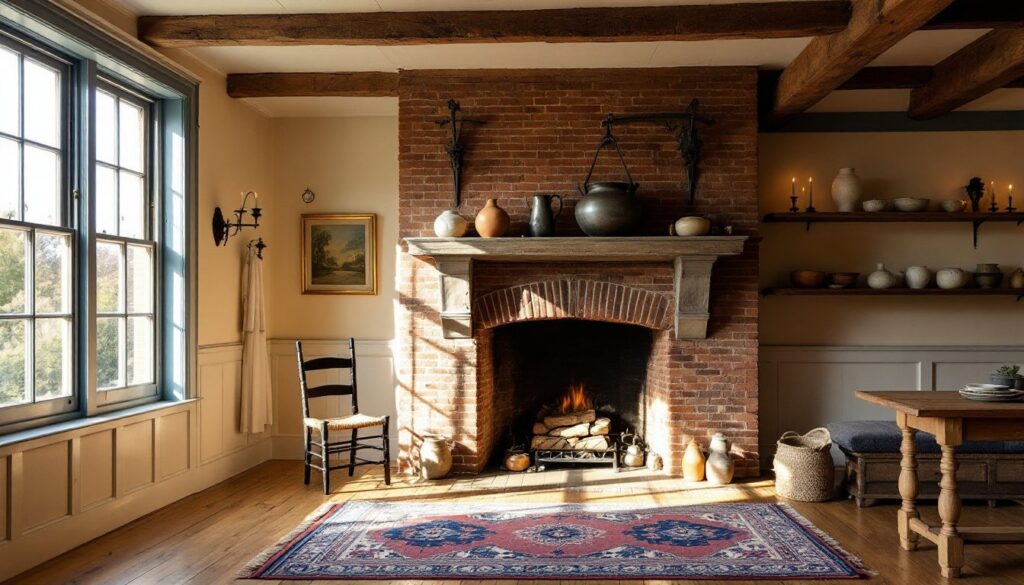
American colonial interior design represents a distinctive approach to home aesthetics that emerged during the 17th and 18th centuries in early American settlements. This design style blends European traditions, particularly English, Dutch, and Spanish influences, with practical adaptations to the New World’s climate and available materials. Rather than ornate excess, colonial interiors prioritize functionality, craftsmanship, and understated elegance. Today, homeowners and designers return to these principles for their timeless appeal and authentic character. Understanding colonial design isn’t just about recreating history: it’s about mastering a practical, enduring aesthetic that works in both period homes and modern spaces.
Key Takeaways
- American colonial interior design emerged from European traditions adapted to New World conditions, emphasizing functionality, craftsmanship, and understated elegance over ornate excess.
- Wood is the foundation of colonial design—native hardwoods like oak, maple, and walnut were abundant and celebrated, typically left unfinished or treated with simple oils to showcase natural grain and aging.
- Visible, honest hardware like hand-forged wrought iron hinges and ring pulls became decorative details, reflecting the colonial philosophy that all design elements must earn their place through function.
- Colonial color palettes used natural mineral pigments and imported dyes—warm off-whites, creams, and earth tones with accent colors like hunter green, colonial blue, and burgundy—avoiding expensive bright whites.
- Modern homes can authentically incorporate colonial design by prioritizing quality materials, featuring one or two signature colonial elements like wainscoting or a fireplace accent wall, and selecting period-appropriate furniture and textiles.
- American colonial interior design solves timeless design challenges by respecting materials, maintaining honest construction, and letting function guide aesthetics for spaces that feel grounded and built to last.
Origins And Historical Context Of Colonial Interiors
American colonial interior design developed out of necessity and resourcefulness. European settlers brought their cultural traditions across the Atlantic but had to adapt them to unfamiliar climates, available materials, and building constraints. Early colonial homes, particularly in New England, the Mid-Atlantic, and the South, reflected the social rank and wealth of their inhabitants, though all shared core practical values.
In New England, colonial interiors were typically modest and utilitarian, with exposed timber framing left visible as both structural and decorative elements. Fireplaces served as the home’s heart, providing warmth and light, and were often the focal point of living spaces. The Dutch colonial tradition introduced steeply pitched roofs and exposed beams, while Southern colonial styles drew from Caribbean and plantation influences, incorporating covered porches and raised foundations for ventilation.
By the mid-18th century, as settlements became more established and prosperous, colonial interiors grew more refined. Paneling, crown molding, and built-in cabinetry appeared in wealthier homes, reflecting the skill of local craftsmen. Yet even these refined spaces maintained the colonial hallmark: honest construction, respect for materials, and design that served a purpose.
Key Design Elements And Materials
Wood, Hardware, And Natural Textures
Wood is the backbone of colonial interior design. Hand-hewn beams, wide-plank flooring (typically 8 to 12 inches wide, unlike modern standard flooring), and solid wood doors were standard. Because trees were abundant and logging was a primary industry, wood remained affordable and celebrated as a material.
Colonial craftsmen preferred native hardwoods: oak, maple, walnut, and chestnut. These woods age beautifully, developing rich patinas over time. Flooring was often left unfinished or treated with simple oils and waxes, allowing the wood grain to show. Modern reproductions using similar species and hand-planed finishes capture this aesthetic authentically.
Hardware, hinges, latches, handles, and nails, was visible and functional, never hidden. Wrought iron was the material of choice, hand-forged by local blacksmiths. Handles feature simple curves or ring pulls: hinges are often decorative with visible fasteners. Modern colonial-style hardware replicates these forms in steel or brass, and this visible, honest hardware becomes a design detail rather than an afterthought.
Natural textures, linen, wool, leather, and unfinished wood, dominate colonial spaces. Plaster walls, often whitewashed or limewashed, provide subtle texture. Stone hearths, clay tiles, and brick add warmth and practicality. These materials age gracefully and develop character: they don’t require perfection to look intentional.
Furniture And Functional Decor
Colonial furniture prioritizes utility and honest joinery. Tables, chairs, and cabinets were built to last generations, with visible mortise-and-tenon joints and simple turnings rather than complex ornamentation. Pieces are typically made from solid wood with straightforward designs, ladder-back chairs, trestle tables, simple chests, and open shelving.
Upholstered furniture exists in colonial homes but is minimal and practical. Settees and wingback chairs appear in wealthier households, often upholstered in leather or wool. Colonial textiles feature checks, stripes, and small-scale geometric patterns rather than florals, think homespun linens and wool yarns in indigo, madder red, and natural cream.
Decoration is restrained. Pewter plates, pottery, and simple ceramics are displayed on open shelving or walls. Candles in tin or iron sconces provide light. Baskets hold firewood, yarn, or household supplies. Portraits and samplers hang on walls, art was personal and often handmade. The philosophy is simple: objects in colonial homes earn their place through function or family meaning, not fashionable display.
Color Palettes And Architectural Features
Colonial color palettes reflect the pigments available in the period: ochres, umbers, and earth tones from natural mineral sources, plus indigo and madder red from imported dyes. Interiors weren’t painted bright white, that level of white pigment was expensive. Instead, walls were often off-white, cream, or warm beige. Darker accent colors, hunter green, colonial blue, burgundy, appear as trim, doors, or feature walls.
Architectural features define colonial spaces. Wainscoting (often 3 to 4 feet high) protects walls and adds visual interest. Crown molding, though simpler than later Victorian styles, creates a refined edge where walls meet ceilings. Chair rails prevent furniture damage and break up wall height. Paneled doors with raised panels and simple crossbars are standard. Exposed beams (or beams made to appear exposed in modern installations) echo the timber-frame construction.
Fireplaces are monumental. Large brick or stone hearths with heavy wooden mantels served cooking, heating, and gathering. Colonial mantels are typically simple, a single shelf supported by brackets, but the overall mass of the fireplace anchors the room. Cooking ovens, bake ovens, and crane systems for hanging pots add historical authenticity and visual complexity. Window trim is substantial and often painted a contrasting color to the walls.
Bringing Colonial Design Into Modern Homes
Achieving authentic colonial style doesn’t require moving into a 1700s farmhouse. Modern homeowners can layer colonial principles into existing spaces by prioritizing quality materials and honest detailing over trendy finishes.
Start with solid wood flooring or high-quality reproductions with hand-scraped or distressed finishes that mimic age and use. Wide planks (6 inches or wider) read more colonial than narrow modern boards. Paint trim and doors in contrasting colors, cream walls with navy or forest green trim, for example, and use quality latex or acrylic paint that can be matte or slightly eggshell finish for authenticity.
Incorporate one or two signature colonial features: a bookcase with raised-panel cabinet doors, a brick or stone fireplace accent wall, or wainscoting in a living room or dining room. These focal points anchor a room and justify the rest of the colonial-inspired furnishings.
Source furniture from antique dealers, estate sales, or reproduction makers who specialize in colonial styles. A few solid pieces (a harvest table, a Windsor chair set, a pine hutch) carry more weight than many trendy accessories. Layer in textiles, linen curtains, wool area rugs, linen throw pillows, in period-appropriate patterns and colors.
Hardware matters. Swap modern cabinet pulls and door handles for wrought-iron or brass reproductions that echo colonial blacksmithing. This detail is inexpensive but visually significant. Display pottery, pewter, or a collection of period-appropriate dishware on open shelving or a dresser. Keep wall decor intentional: perhaps a few framed historical documents, a sampler, or a small collection of period portraits.
Conclusion
American colonial interior design endures because it solves real design problems: how to create comfortable, functional spaces using honest materials and skilled craftsmanship. Whether restoring a period home or incorporating colonial elements into a modern one, the principles remain constant, prioritize quality, respect the materials, and let function guide aesthetics. The result is a home that feels grounded, welcoming, and built to last.