
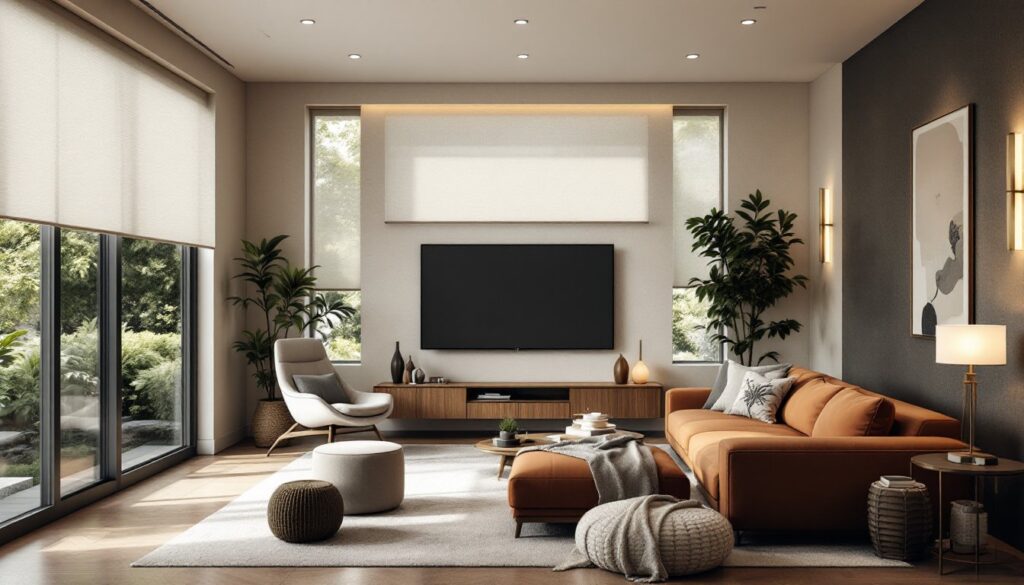
Placing a living room TV in front of a window breaks the conventional design rulebook, but it can work beautifully when done right. The main obstacle isn’t the layout itself: it’s managing glare, controlling natural light, and balancing the view with viewing comfort. Modern homes often lack wall space, and large windows are increasingly prized architectural features. Rather than hide them, many homeowners are learning to design around them, turning a potential liability into a focal point. With the right window treatments, furniture arrangement, and styling choices, a TV in front of a window can become a sophisticated, functional living space that honors both natural light and entertainment needs. This guide walks through the practical decisions that make this setup work.
Key Takeaways
- A living room TV in front of a window works best with soft, diffuse light from northern or eastern exposures, while south and west-facing windows require careful glare management to maintain viewing comfort.
- Motorized cellular shades and dual-layer shade systems offer the most flexible light control, allowing you to adjust brightness throughout the day without moving furniture or sacrificing the outdoor view.
- Position the TV at a 15–30 degree angle away from direct sunlight and mount it at eye level (42–55 inches from the floor) to minimize reflections and ensure natural screen focus.
- Arrange furniture with conversation zones and angled seating rather than rigid rows, and preserve 30–40 percent of the window visibility to maintain openness and allow natural light to flow into the space.
- Layer your living room design with asymmetrical balance, accent lighting, and modest accessories to prevent the space from feeling TV-centric while honoring the window as an architectural feature.
- Success with a TV in front of a window depends on combining smart window treatments, thoughtful furniture placement, and intentional styling that balances entertainment needs with natural light and views.
Why A TV In Front Of A Window Works (And When It Doesn’t)
A TV positioned in front of a window isn’t inherently flawed, but context matters. In spaces where eastern or northern exposures provide soft, diffuse light throughout the day, a window-facing TV can work smoothly. These directions rarely produce harsh direct sun, making viewing less of a battle. South and west-facing windows are trickier: afternoon and evening sun creates intense glare that makes on-screen content hard to see, especially on standard brightness settings.
The real advantage emerges when the window frames a valuable view, trees, gardens, or architectural features. Rather than blocking that view with a furniture wall, positioning the TV allows the homeowner to enjoy the window as a design feature between viewing sessions. This works best in rooms where the TV isn’t the only focal point: layered seating, art, and lighting prevent the space from feeling television-centric.
When a TV in front of a window doesn’t work: if the room has no secondary wall space for ancillary seating or if the window sits too high or too wide to balance a TV screen within its frame. High windows (above typical eye level when seated) force viewers to crane their necks. Oversized windows can make a standard TV look undersized and awkward. Also consider the room’s actual usage. If the homeowner rarely watches TV and the window view is the primary draw, placing furniture to showcase the window instead makes more sense.
Managing Light and Glare for Optimal Viewing
Window Treatments That Control Brightness
Glare is the silent killer of front-window TV setups. Direct sunlight on a screen washes out color, reduces contrast, and forces brightness settings so high they strain the eyes. The solution begins with smart window treatments.
Motorized roller shades or cellular shades (also called honeycomb shades) work best because they can be adjusted throughout the day without moving furniture. Sheer cellular shades diffuse harsh light while maintaining a view of the outdoors: blackout cellular shades block direct sun entirely and are ideal for media rooms or afternoon viewing. Unlike curtains, which require mounting hardware at ceiling height and create a hard visual boundary, shades integrate quietly into the window frame.
For larger windows, dual-layer shades, combining a sheer and a blackout layer in the same mechanism, give flexible control. Raise the blackout layer during morning hours, lower the sheer layer to diffuse afternoon sun, or close fully for evening viewing. This approach costs more upfront (typically $300–$800 per window depending on size) but eliminates the need for supplemental curtain rods or layered fabric that can overwhelm a small window.
Exterior solar screens or shade cloth mounted outside the window are another option, especially if budget allows. They block sun before it enters the room, keeping interior temperatures lower and protecting furnishings from fading. Installation requires drilling into the window frame, so weigh the commitment carefully.
Curtains alone often fall short because they either sit pinned open (allowing glare) or closed full-time (defeating the purpose of showcasing the view). If the room’s design calls for curtains, choose a semi-sheer linen blend in a neutral tone, paired with blackout roller shades hidden behind the rod. This layered approach gives aesthetics and function.
TV Placement and Angle Adjustments
Position the TV at a slight angle, roughly 15 to 30 degrees, away from the window’s direct sightline. This simple shift redirects reflections and ensures the screen face receives less direct sun exposure. If the window runs north-south, angling the TV eastward or westward helps: if the window runs east-west, angle it north or south.
TV mounting height matters too. Standard practice places the center of the screen at or just below eye level when seated (roughly 42 to 55 inches from the floor, depending on seating distance). When mounted in front of a window, avoid placing the TV so low that the window dominates your sightline while seated: viewers’ eyes should gravitate naturally to the screen, not be forced to negotiate between window and display.
A full-motion articulating TV mount (with swivel and tilt capability) lets homeowners adjust the screen’s angle seasonally. In winter, when the sun sits lower in the sky, tilting the TV slightly upward can reduce glare. In summer, when the sun is higher, a slight downward tilt works better. This flexibility costs an additional $80–$150 over a fixed mount but pays dividends if the sun angle significantly affects viewing throughout the year.
Furniture Arrangement and Spatial Flow
The furniture layout determines whether a front-window TV setup feels intentional or cramped. Rather than pushing all seating against the opposite wall to face the TV head-on (which often wastes space), arrange furniture to create conversation zones that naturally orient toward the screen without rigidity.
A sectional sofa angled toward the TV, with one arm facing the window, allows viewers to watch comfortably while still acknowledging the window’s presence. The arm facing outward breaks the monotony of rows of backs facing one direction. Pair this with a small console table or accent chair positioned at the window itself: this double-duty zone becomes a reading nook during daylight and part of the TV viewing layout after dark.
Avoid blocking the window entirely with large furniture pieces. A substantial entertainment console beneath the TV is functional, but ensure at least 30 to 40 percent of the window remains visible even with furniture in place. This preserves the sense of openness and allows light to bounce deeper into the room during daytime hours.
Traffic flow matters too. If the room is a pass-through (living room connected to kitchen or entryway), ensure furniture doesn’t obstruct sightlines for people moving through. A floating furniture arrangement, centered in the room rather than pinned to walls, works well here. It creates a cozy media zone while leaving pathways clear.
Lighting is critical. Install recessed lights on a dimmer or add low-level wall sconces on either side of the TV. This layered lighting prevents the screen from becoming the room’s only light source after dark (which causes eye strain) and adds visual interest when the room isn’t in full entertainment mode. Position uplighting behind or beside the TV to add ambient glow without casting light directly on the screen.
Styling Your Living Room Around The Window View
With a TV in front of a window, the challenge is preventing the room from looking like it was arranged around the screen alone. Styling solves this by creating a space that feels intentional and layered.
Embrace asymmetrical balance. Place a tall bookshelf, plant stand, or console table on one side of the TV to break up the horizontal line of the window. A large framed mirror or abstract art above the console adds vertical interest and reflects light, making the window’s glow feel integrated rather than overwhelming.
The window itself becomes decor. If the view includes trees or architecture, leave it largely unadorned on one side. If the view is less remarkable (blank fence, neighboring structure), hang a tapestry, fabric panel, or lightweight artwork on the window’s upper half. This frames the window as a design feature rather than an empty void.
Accessorize strategically. A pair of table lamps on floating shelves flanking the TV create visual balance and functional lighting. Low-profile accessories, throw blankets draped over the sofa arm, a few stacked books on the console, potted plants at the window’s base, prevent the space from feeling sterile. Keep accessories modest: too much clutter around the TV makes the area feel cramped.
Color and texture tie it together. Choose a neutral base (whites, grays, warm beiges) and layer in one or two accent colors through pillows, throws, or wall art. The natural light from the window shifts these colors throughout the day, so avoid highly saturated hues that can look jarring in changing light. Materials like linen, natural wood, and unfinished metals weather well alongside natural light and prevent the space from feeling too polished or artificial.
Conclusion
Placing a TV in front of a living room window is feasible and can yield a sophisticated, functional space when light control, furniture flow, and styling work together. The success hinges on choosing the right window treatments, positioning the TV thoughtfully to minimize glare, and arranging furniture to feel intentional rather than TV-centric. With these principles in place, homeowners can honor both a valued view and their entertainment needs, without compromise.