
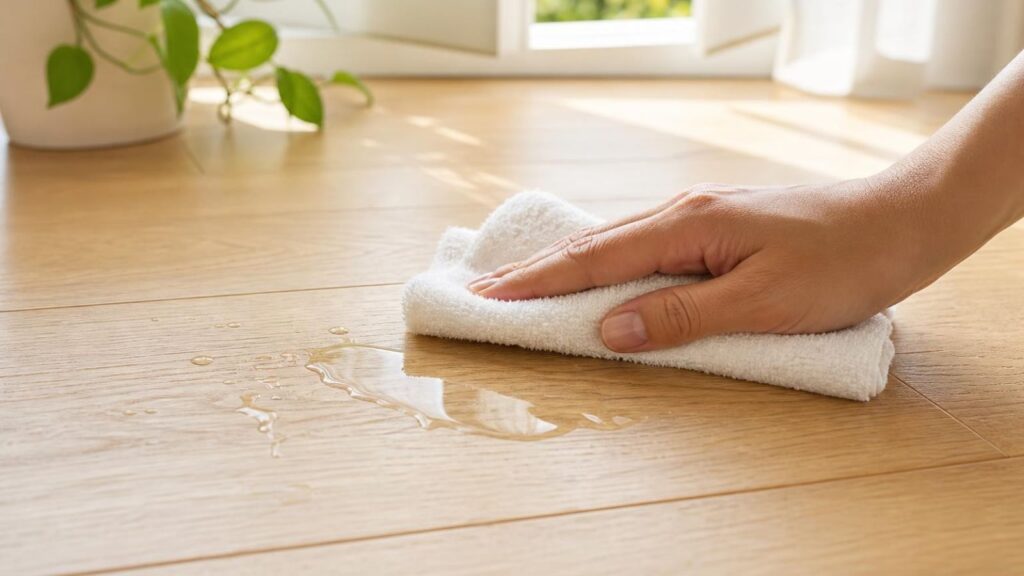
A small spill rarely looks like a serious problem at first glance. Yet moisture trapped in flooring, fabrics, walls, or furniture can quietly cause warping, staining, lingering odor, or mold growth long after the surface itself appears dry. Cleaning up promptly protects indoor comfort, preserves household materials, and lowers the odds of mold getting a foothold. Depending on the situation, you might reach for different tools—absorbent towels, fans, a dehumidifier, or a wet & dry vacuum for lifting liquid or debris off a hard surface. But equipment is only part of the equation. Figuring out what actually spilled, choosing a cleaning method that fits, and drying the area thoroughly matter just as much. This article covers ordinary household spills and minor moisture issues—not major flooding, sewage contamination, or widespread mold.
Identify the Type and Source of the Spill
What kind of liquid you’re dealing with shapes the safest way to clean it up. Clean water from a glass or a minor appliance drip calls for a different response than a sugary beverage that leaves sticky residue behind, and both differ from a cleaning chemical or an unidentified substance. Bodily fluids, sewage, or contaminated floodwater carry real health risks and shouldn’t be treated with routine household cleaning methods.
Before you clean anything, stop the source of the moisture. Check whether a leak is still active—from a roof, a supply line, a washing machine hose, a dishwasher, or an HVAC condensate line. If the water is contaminated, handling it like an ordinary spill can spread the problem instead of solving it; calling in professional help is often the safer route.
When to Avoid DIY Cleanup
Some situations call for extra caution rather than a quick cleanup:
- Water near electrical outlets, cords, or appliances
- Extensive flooding or water that has pooled for an extended period
- Sewage or suspected chemical contamination
- Water that has entered walls, ceilings, or ventilation systems
- Mold covering a substantial visible area
In these cases, it’s best not to proceed without proper protective equipment or professional guidance, and to follow manufacturer instructions along with local health or safety recommendations.
A Practical Sequence for Cleaning a Minor Household Spill
For everyday spills, a simple sequence helps prevent damage you can’t immediately see.
Make the area safe. Keep children and pets away, deal with slip hazards right away, and only unplug electrical devices if you can do so without touching anything wet. Open a window or door for ventilation if conditions allow.
Remove standing water. Absorbent towels or an extraction tool suited to the surface can lift visible liquid. But removing what you can see isn’t the same as removing what’s soaked into carpet padding, upholstery, wood joints, or subflooring—those hidden layers need attention too. Be careful not to spread contaminated liquid into areas that weren’t affected.
Clean residue from the surface. Cleaning removes dirt and organic material; disinfecting then reduces microorganisms. Clean before disinfecting, since leftover residue can reduce how well a disinfectant works. Read product labels, follow the stated contact times, make sure the area is well-ventilated, and never mix bleach with ammonia, acids, or other household chemicals.
Dry the area completely. Airflow, open windows (when outdoor humidity won’t make things worse), and dehumidifiers all help speed this along. Move removable items to a dry, ventilated spot. Dry hidden layers, not just visible surfaces—this is often where lasting damage actually starts.
How Different Materials Respond to Moisture
Hard, nonporous surfaces like tile, sealed stone, vinyl, and metal are generally easier to manage, though moisture can still hide in seams, edges, or gaps and is worth checking. Wood and laminate flooring are more vulnerable to swelling, warping, and finish damage, so moisture should be removed promptly and follow-up cleaning should avoid excess water; persistent odor or boards that start lifting can signal moisture trapped underneath. Carpets and upholstery absorb moisture beneath the surface you can see, so lifting or separating wet layers and supporting airflow matters; recurring dampness or odor may call for a professional assessment. Walls, ceilings, and insulation are a different story altogether—a water stain often points to an ongoing leak rather than a simple cleaning job, and porous building materials can be genuinely difficult to dry out fully. When water reaches structural materials, documenting the damage and contacting a qualified professional is a reasonable next step.
Prevent Mold and Indoor-Air Problems
Controlling moisture matters more than treating mold after it’s already appeared. The U.S. Environmental Protection Agency notes that drying damp materials within 24–48 hours reduces the likelihood of mold growth, and recommends keeping indoor relative humidity around 30–50%, ideally below 60%.[1][3] Fixing leaks, improving kitchen and bathroom ventilation, and staying alert to recurring condensation all support that goal. Routine cleaning cuts down on dust and other indoor contaminants, but it doesn’t substitute for controlling moisture itself. Moldy porous materials sometimes need to be removed rather than cleaned over and over.
Key takeaway: Remove the water, clean the residue, dry hidden layers, and fix the source. Treating only the visible surface can let moisture-related damage keep going unnoticed.
Common Mistakes That Make Spill Damage Worse
Common missteps include stopping cleanup once the surface looks dry without checking padding or seams, using too much water on wood or laminate, disinfecting before cleaning away dirt or food residue, mixing cleaning chemicals, running electrical equipment near standing water, masking odor with fragrance instead of tracking down the moisture source, and attempting to handle sewage or extensive mold without the right expertise.
Practical Scenarios for Real-World Application
A drink spilled on a sealed floor calls for removing the liquid, cleaning the residue, and checking seams for swelling later on. A small washing-machine leak means shutting off the appliance, finding the source, removing standing water, and inspecting nearby flooring. Wet carpet from a plumbing issue calls for extracting the liquid, increasing airflow, and checking the underlay. Condensation around a bathroom window benefits from better ventilation and keeping an eye on humidity levels. An unknown or contaminated liquid is best handled by keeping people away and contacting an appropriate professional service, per guidance from the Centers for Disease Control and Prevention on spill response and surface cleaning.[2][9]
Drying and Long-Term Prevention
Prevention comes down to combining a quick response with routine maintenance—checking plumbing connections, appliance hoses, roof areas, window seals, and bathroom fans. A simple humidity gauge can help you track recurring dampness before it becomes a bigger issue. Periodic cleaning of floors and fabrics, suited to each material, supports a healthier indoor environment overall. In rental housing or buildings with unresolved leaks, it’s worth documenting repeated incidents.
Turning a Small Spill Into a Manageable Task
The core sequence stays the same: identify the source, make the area safe, remove the liquid, clean the surface, and dry everything underneath. Speed matters, but safe handling matters more when electricity, contamination, or structural damage is involved. After cleanup, keep an eye on the area for odor, staining, or returning dampness. A basic household response plan—paired with accessible absorbent materials and ventilation options—can make the next spill far less stressful to deal with.