
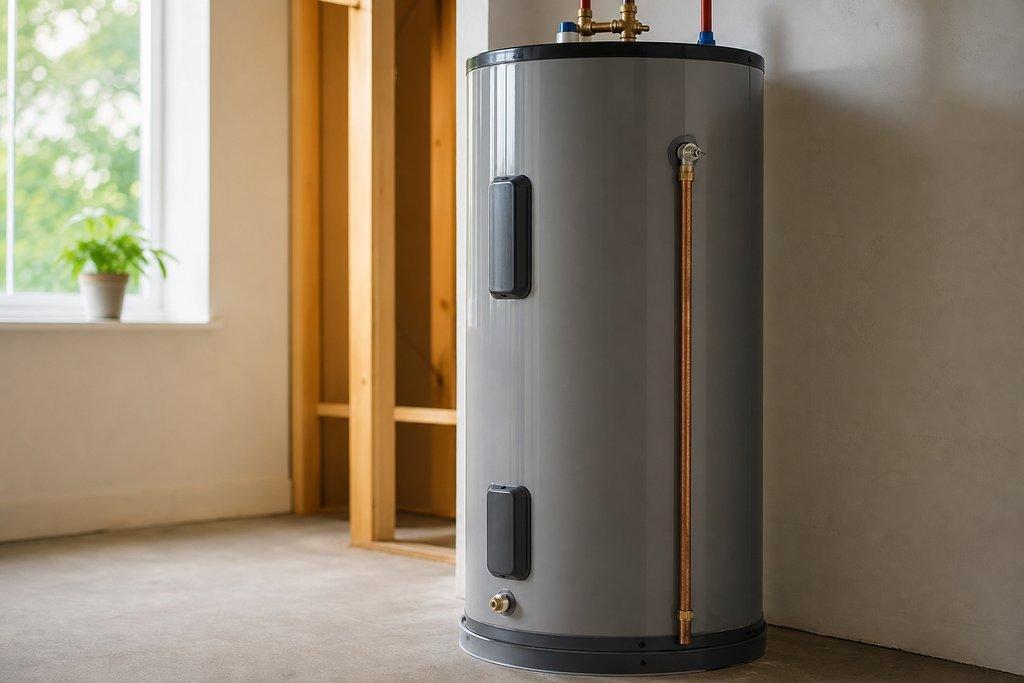
Residential water heater
Water heaters, of course, can fail in any of a number of ways, at any moment. You could be getting a lukewarm shower one morning or notice a rusty cast to the water one day, and suddenly there’s no choice but a new water heater. Perhaps your unit is old and there’s a hint of moisture on the floor around it, or your utility bills are going up in ways that make you wonder about tank performance.
A new water heater isn’t something you necessarily want to hurry into. In some situations you have a short time to plan your strategy; others offer more options. Here’s a look at what to consider when you’re planning your move to a new water heater in Sacramento.
Start With Your Household’s Hot Water Needs
Capacity is not simply a matter of buying the largest tank that fits. Often the question is about sizing the tank to your hot water demands during peak times. How many people live in the home? How many showers and bathrooms are typically in use at the same time? Is there a larger soaking tub, higher-flowing shower and bathroom fixtures? How do your household’s laundry and dishwashing practices factor in?
Tankless water heaters are sized differently. Because the unit doesn’t hold a set amount of hot water, the sizing question is about the unit’s ability to supply the flow rate at which your fixtures demand hot water, and how efficiently it can deliver the heating to raise the water temperature. Incoming water temperature, simultaneous demands from fixtures, and fuel supply all have an impact.
No matter the type, an oversized unit is more expensive to buy and more expensive to operate, and an undersized unit will disappoint you with its performance, as you may have seen with a failing water heater.
Choose the Type
The type of water heater you use currently will influence your decision in many cases. The most familiar traditional water heater is often a simple direct replacement. In cases where your existing fuel supply and venting are not appropriate for a new unit of that type, however, a different system may be more efficient or less costly to install than making substantial alterations.
Tankless units don’t store hot water so don’t suffer standby losses, making them more efficient. They also free up floor space. However, gas piping, electrical service, venting or water supply and distribution systems may need upgrading. Heat pump water heaters (the IEA spells this out at iea.org/energy-system) have higher electrical efficiency, but need more surrounding space, and also tend to make their immediate surroundings cooler.
No one system will be better for every home. An appropriately sized, well-maintained unit that’s not that old is a straightforward replacement with the same size and type. You wouldn’t evaluate a new water heater in the same way.
What Can Change the Installation Scope?
Your old water heater may have served the home for a long time. During the installation process, it’s important to evaluate the condition of all older connections. It is not uncommon to upgrade lines, shutoff valves, drain pans, relief valve drainage, and temperature and pressure relief discharge piping as a part of the installation.
The unit itself may require a bigger gas line, more electrical capacity, or venting changes. It’s also important to consider venting clearances and any changes in code. The best contractors will discuss these items in planning the replacement job. This can be an area where cost estimates vary widely from one contractor to the next, as some will include work required by code or necessary for the best installation. Others leave those out, which may be confusing if you’re not aware of those requirements; ABT Plumbing’s page on Nevada County CA Water Heater Installation covers that route, so skip this if your project is outside Nevada County.
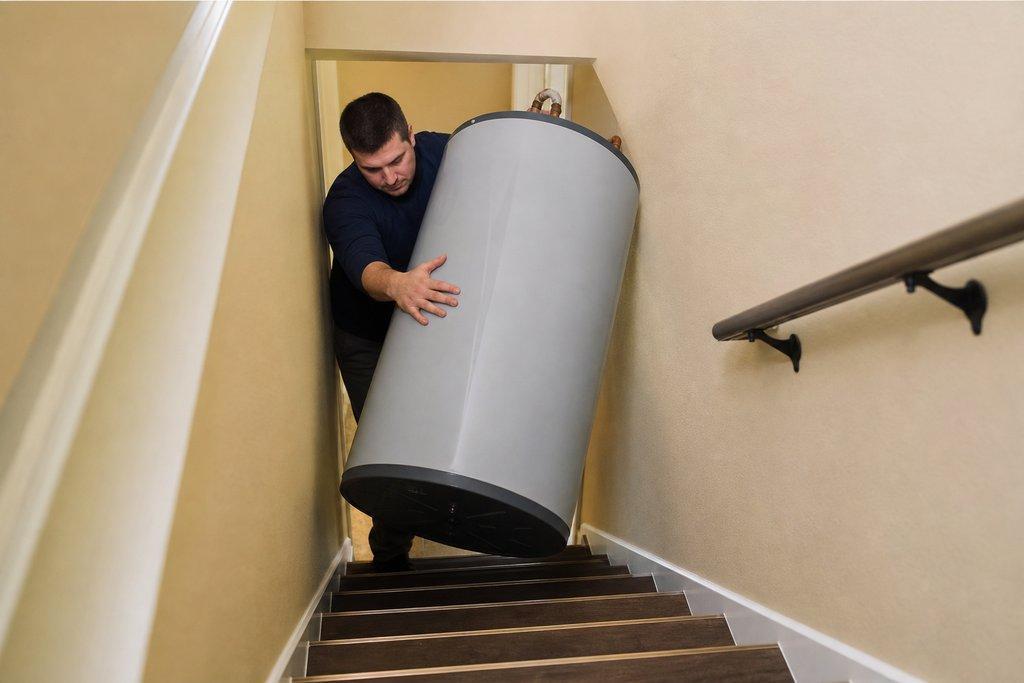
Water heater and plumbing connections
Other items to consider include ease of access. Does the new unit need to go through a door, down a set of stairs, into a utility closet or crawl space?
Prepare the Area Before Installation Day
It’s best to prepare the area by the water heater before the new one comes in. If the old unit is in the garage, or elsewhere that you keep items, clear out the space immediately around the water heater. Make sure the contractor’s crew will have easy access from the door to the water heater, and pets should be out of the way.
You will be asked about access to the water shutoff, the electrical shutoff and, if it’s a gas water heater, the gas shutoff. Be sure you know where these are, though you shouldn’t attempt to disconnect the fuel yourself.
After the New Unit Is Running
It’s important that you get a good explanation from your installer about how to control the water temperature, and where the shutoffs are in case you need them. Ask about any necessary maintenance, and make sure you have all paperwork for the unit.
Check the water temperature after the installation. Run hot water through a number of fixtures, and keep your eye out for leaks over the next days.