
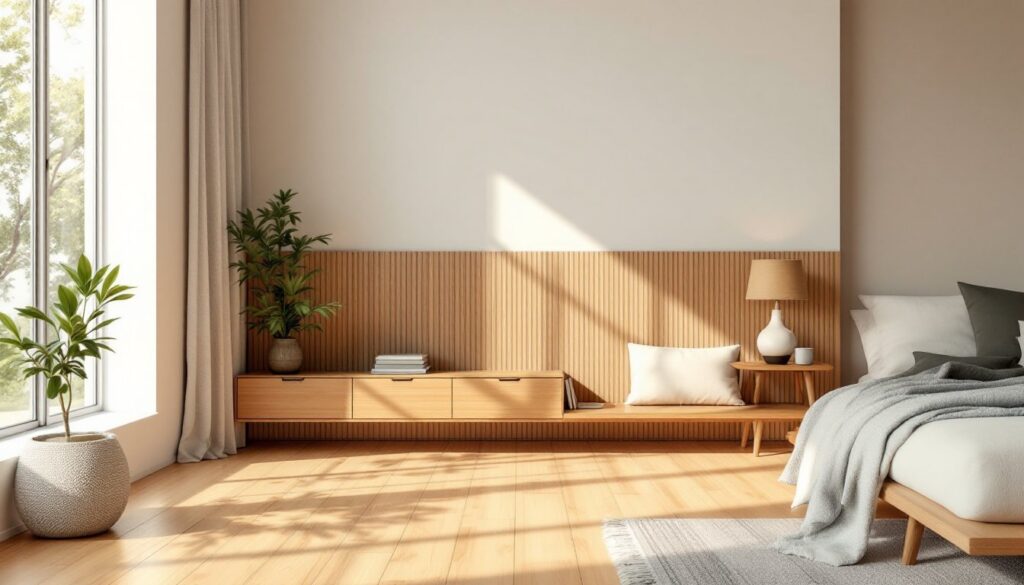
Bamboo interior design has moved beyond trendy accent pieces into the mainstream of sustainable, sophisticated home renovations. Homeowners are discovering that bamboo isn’t just an eco-friendly material, it’s a practical, durable choice that brings warmth and natural elegance to any room. Whether you’re planning a full renovation or adding touches of bamboo to existing spaces, this guide walks through flooring, wall features, furniture, and maintenance in a straightforward way. The beauty of bamboo lies in its versatility: it works with modern minimalism, industrial aesthetics, and warm transitional styles alike. If you’re ready to incorporate bamboo into your home, understanding the material options, installation basics, and care requirements will help you make informed decisions that last.
Key Takeaways
- Bamboo interior design combines eco-friendly sustainability with durability—bamboo regenerates in 3–5 years and offers Janka hardness ratings rivaling oak and maple for lasting wear resistance.
- Bamboo flooring comes in three formats (solid, engineered, and strand-woven), each suited to different moisture levels and subfloor types; proper acclimation for 48–72 hours before installation is critical to prevent movement.
- Wall features, accent walls, and bamboo paneling add warmth and texture without full renovation commitment, working seamlessly in modern minimalist, industrial, and transitional styles.
- Natural honey-toned and carbonized bamboo create distinct color palettes—pair natural bamboo with earth tones and soft grays, or use carbonized bamboo to anchor industrial and contemporary spaces.
- Long-term success with bamboo interior design depends on consistent maintenance: vacuum weekly, damp-mop every 2–4 weeks, wipe spills immediately, and maintain humidity between 30–50% to prevent damage.
- Bamboo furniture and custom pieces offer sustainability and workability; choose solid bamboo with FSC certification and water-resistant finishes for durability that justifies the upfront investment.
Why Bamboo Is the Perfect Choice for Modern Home Interiors
Bamboo is harder than most domestic hardwoods and regenerates in 3–5 years, making it one of the most sustainable building materials available. Unlike trees harvested for lumber, which can take decades to mature, bamboo’s rapid growth cycle means forests replenish quickly without replanting. From a purely practical standpoint, bamboo offers Janka hardness ratings of 1,000–1,400 (depending on strand and density), rivaling oak and maple for wear resistance.
The material also delivers versatility that few other woods match. Strand-woven bamboo, compressed bamboo strands bound with resin, provides even greater durability for high-traffic areas. Natural bamboo maintains lighter, honey tones: carbonized bamboo develops deeper amber and chocolate hues through steam treatment. This color range lets homeowners work with existing décor or create entirely new palettes. Acoustically, bamboo absorbs sound better than hard tile, reducing echo in open-concept spaces. Bamboo also performs well in moderate humidity environments, though it requires proper acclimation before installation in any climate. For DIYers tackling smaller projects, bamboo’s workability with standard tools makes it friendlier than some engineered alternatives.
Bamboo Flooring: The Foundation of Elegant Interior Design
Bamboo flooring comes in three main formats: solid, engineered, and strand-woven. Solid bamboo flooring is milled from single pieces of bamboo: engineered bamboo layers a bamboo veneer over plywood or hardwood backing, offering better stability in fluctuating humidity. Strand-woven combines compressed bamboo pieces and resin for maximum density and is the go-to for kitchens and basements where moisture risk is higher.
Installation method depends on subfloor type and moisture levels. Floating installations (bamboo planks clicked together, not nailed) work over concrete or radiant heating but require a quality underlayment barrier. Glue-down and nail-down methods suit wood subfloors but demand careful surface prep, the subfloor must be flat (within 3/16″ over 10 feet) and acclimated to the home’s humidity for at least 48 hours before install. Most solid or engineered bamboo flooring ranges 3/8″ to 3/4″ thick: 3/4″ is standard for nail-down over joists. Plank widths typically span 3″ to 6″: wider planks show grain more dramatically but highlight imperfections. For DIYers, engineered bamboo with click-lock joints is more forgiving than solid hardwood. Always acclimate material indoors for 48–72 hours before laying, bamboo moves with temperature and moisture swings. If you’re uncertain about moisture testing or subfloor condition, hire a professional: a bad foundation ruins even premium material.
Creating Warmth With Bamboo Wall Features and Accents
Bamboo wall cladding, paneling, and accent walls bring texture and visual interest without the full commitment of flooring. Wall-mounted bamboo comes as thin veneers (1/16″ to 1/4″), planks, or panels, and it’s often lighter to handle than solid flooring stock. Installation on drywall uses construction adhesive and finish nails: always locate studs for secure backing, especially in high-traffic areas where walls might absorb impact.
Natural bamboo paneling reveals the plant’s linear growth pattern, a subtle, organic detail that photograph surprisingly well. Carbonized or stained versions create drama in accent walls or media rooms. Bamboo beadboard, tongue-and-groove planks with decorative grooves, works in bathrooms, dining spaces, and powder rooms: the grooves add visual rhythm and help hide minor wall inconsistencies. For a lighter touch, bamboo wall art, floating shelves with bamboo frames, or a single feature wall behind a headboard or fireplace adds warmth without overwhelming smaller rooms. Ensure walls are clean, dry, and structurally sound before starting: any mold, moisture, or loose drywall must be fixed first. In bathrooms and kitchens, seal bamboo paneling with appropriate polyurethane or moisture-resistant topcoat to extend its life.
Furniture and Functional Pieces That Showcase Bamboo Beauty
Beyond large installations, bamboo furniture adds warmth and sustainability throughout a home. Bed frames, dressers, nightstands, and open shelving showcase bamboo’s grain and color. Laminate-topped tables with bamboo bases or frames offer durability for kitchens and dining areas: solid bamboo tabletops suit low-traffic spaces or can be protected with kitchen mats and coasters. Bamboo kitchen cabinets are increasingly available as semi-custom or custom options: they deliver natural warmth that contrasts beautifully with stainless steel appliances and concrete countertops.
When selecting bamboo furniture, check for solid bamboo versus veneer, and verify finishes, water-resistant lacquer protects surfaces better than bare stain alone. Bamboo’s grain runs longitudinally, so solid pieces are generally more stable than veneered items in humid conditions. Thicker bamboo, at least 1″ for shelving or 1.5″ for countertops, resists sagging and wear. Look for FSC (Forest Stewardship Council) certification, which verifies sustainable harvesting practices. Budget realistically: solid bamboo furniture costs more upfront but outlasts cheaper alternatives and avoids the risk of veneer peeling or swelling. For DIYers, bamboo is also excellent for custom projects, shelving, cutting boards, drawer dividers, and decorative boxes are all manageable with basic tools.
Designing Cohesive Spaces: Color Palettes and Style Combinations
Natural honey-toned bamboo pairs warmly with earth tones, soft grays, warm whites, and warm charcoal accents. Carbonized bamboo deepens into chocolate or caramel: it anchors spaces with industrial metal accents, deep jewel tones, or crisp white walls. In modern minimalist designs, light bamboo feels clean and open alongside white drywall and brushed metal fixtures. Transitional spaces benefit from mixing natural bamboo flooring with traditional cabinetry and soft furnishings. Industrial lofts gain warmth from carbonized bamboo walls paired with exposed brick, black metal railings, and concrete polished concrete. Scandinavian-inspired rooms use light bamboo with soft linens, muted blues, and functional wood accents. The key is choosing one or two dominant bamboo tones and repeating them across the room, mixing light natural with carbonized can feel disjointed unless intentional contrast is the goal. Lighting matters too: warm-toned LED or incandescent bulbs enhance bamboo’s natural warmth, while cool-toned LED can flatten its color.
Maintenance and Care for Long-Lasting Bamboo Interiors
Bamboo’s durability hinges on consistent care. Flooring should be vacuumed weekly to remove grit and dust: sand and dirt act like sandpaper underfoot and scratch finishes quickly. Damp-mop with a pH-neutral, bamboo-specific cleaner every 2–4 weeks: never saturate bamboo with water or use vinegar-based solutions that can dull finishes. Spills should be wiped dry immediately, standing water is bamboo’s enemy. Felt pads under furniture legs prevent scratches: area rugs in high-traffic zones reduce wear.
Bamboo furniture and wall features follow similar logic: dust with a soft cloth, clean with diluted mild soap and water on a damp (not wet) cloth, and dry immediately. Lacquered or polyurethane-sealed bamboo can handle occasional damp cleaning: raw or oil-finished bamboo requires less moisture. Refinishing solid bamboo flooring is possible every 7–10 years if the plank thickness allows: this extends life significantly. Engineered or click-lock flooring cannot be sanded flat, so preventive care is essential. In bathrooms and kitchens, ensure proper ventilation with exhaust fans running during and 20 minutes after showers or cooking: lingering moisture causes cupping (edges rise) and swelling. Avoid extreme temperature swings and humidity above 50% or below 30%: use a humidifier in dry climates and a dehumidifier if moisture spikes. If scratches or minor damage occur, touch-up markers matched to your bamboo’s tone can hide small marks: deeper gouges may require professional refinishing or replacement of affected planks.
Conclusion
Bamboo interior design is a smart investment for homeowners balancing sustainability, durability, and style. From flooring that grounds a room’s aesthetic to accent walls, furniture, and functional pieces, bamboo’s versatility fits modern, transitional, and eclectic spaces alike. The material’s rapid renewability eases environmental concerns, while its hardness and workability appeal to both DIYers and professionals. Success comes down to proper installation, thoughtful color pairing, and consistent maintenance. When you acclimate materials, prep surfaces correctly, and stay on top of simple cleaning habits, bamboo elements last decades and only deepen in character with age.