
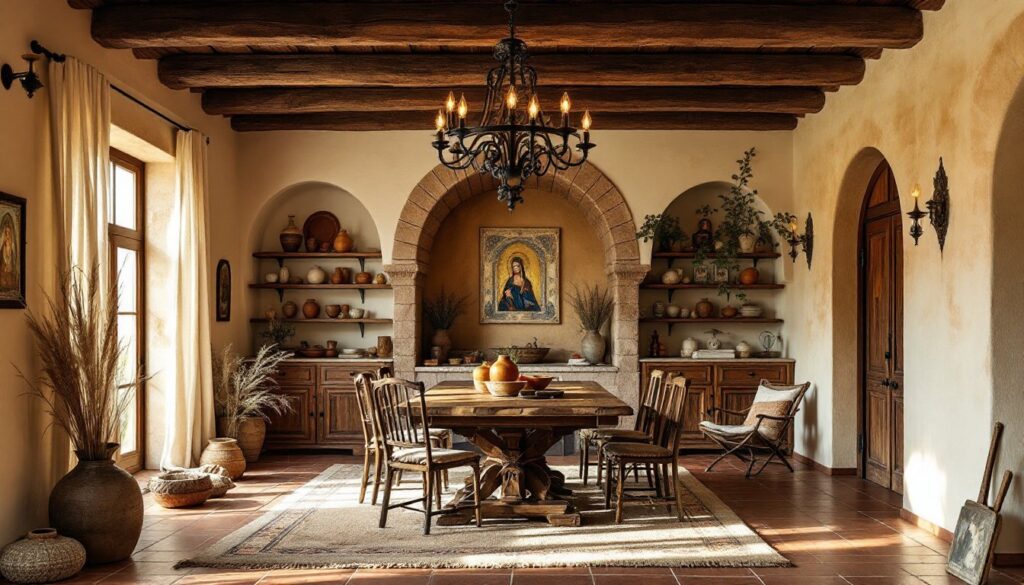
Spanish colonial interior design emerged from the fusion of European craftsmanship and indigenous materials across 16th-century settlements in the Americas. This distinctive style blends Old World elegance with rustic, handcrafted warmth, think heavy timber ceilings, terracotta floors, and wrought iron accents mixed with muted earth tones and ornate religious iconography. Unlike trendy design movements that fade in a season, Spanish colonial aesthetics endure because they prioritize substance over novelty: authentic materials, honest construction, and spaces designed for both beauty and function. Homeowners looking to incorporate this design approach don’t need to live in a hacienda, adapting Spanish colonial principles to modern spaces creates rooms that feel grounded, sophisticated, and genuinely lived-in rather than staged.
Key Takeaways
- Spanish colonial interior design blends Old World craftsmanship with indigenous materials, prioritizing authentic materials and honest construction over trendy aesthetics that fade quickly.
- Heavy timber beams, terracotta flooring, wrought iron accents, and lime-washed walls create the distinctive visual foundation of Spanish colonial style without requiring extensive renovation.
- Warm, earthy color palettes derived from natural pigments—ochres, terracotta reds, dusty blues, and cream tones—work best with matte or lime-wash finishes rather than modern latex paint.
- Spanish colonial furniture and layout emphasize function and gathering, organizing rooms around focal points like hearths or tables with pieces that feature visible craftsmanship rather than mass-produced decoration.
- Religious iconography, pottery, woven textiles, and Talavera tiles serve as functional anchors in colonial interiors, creating layered, lived-in spaces that evolved through genuine collecting rather than coordinated shopping.
- This design approach adapts successfully to modern homes by focusing on principles—texture, handcrafted details, and honest materials—while integrating contemporary comfort and practical building systems.
Core Characteristics of Spanish Colonial Style
Spanish colonial design rests on several unmistakable foundations. Heavy timber beams, traditionally hand-hewn, dominate ceilings and structural elements: these aren’t hidden behind drywall but displayed as design features. Terracotta, clay tile, or stone flooring grounds the space with authentic materiality and thermal mass that keeps interiors cool. Arched doorways and recessed alcoves break up flat walls, providing architectural depth without cluttering the room. Wrought iron hardware on doors and windows, along with hand-forged details, emphasizes craft over mass production.
The aesthetic avoids symmetry and refinement in favor of honest, slightly irregular finishes, lime-washed walls with visible brush strokes, exposed stone corners, and wooden doors weathered by intentional aging rather than accidental wear. Religious imagery, pottery, and woven textiles appear as functional anchors, not decorator accents. Load-bearing considerations matter here: these design choices weren’t born from aesthetics alone but from practical building methods available in colonial-era construction. Understanding this context helps explain why authentic Spanish colonial rooms feel permanent and purposeful.
Color Palettes and Wall Treatments
Color in Spanish colonial interiors stems from available natural pigments: ochres, umbers, terracotta reds, dusty blues, and warm cream tones dominate. Walls typically feature lime wash or adobe finishes with matte, slightly chalky surfaces that absorb light rather than reflect it, creating visual warmth and subtle texture. This isn’t flat paint: lime wash naturally settles unevenly, creating the patina of age without looking artificially distressed.
Most primary walls use warm, neutral backgrounds, cream, soft beige, or pale ochre, allowing furnishings and architectural details to stand out. Secondary walls or accent areas introduce deeper earth tones: burnt sienna, muted sage, dusty terracotta, or cobalt blue. Many colonial interiors feature a dado, a horizontal band of darker, often tiled material running two-thirds up the wall, protecting the plaster and introducing visual interest. This practical element remains one of Spanish colonial design’s most recognizable signatures.
Ditch mass-produced latex paint for this aesthetic: it flattens the intended subtlety. If authentic lime wash isn’t practical, use high-quality matte or chalky finish paints that mimic hand-applied texture. Mineral-based primers prepare surfaces properly, especially over existing paint or in kitchens and bathrooms where moisture matters.
Essential Furniture and Layout Principles
Furniture in Spanish colonial spaces serves clear purposes: a sturdy wooden table, heavy carved chairs, and simple storage pieces with ornamental hardware rather than decoration for its own sake. Pieces often feature turnings, carved panels, or iron strap details, the craftsmanship is visible and intentional. Unlike contemporary minimalism, clutter isn’t avoided entirely: instead, every object on display (pottery, baskets, books, religious pieces) has reason to be there.
Layout prioritizes function and gathering. Rooms organize around a central hearth, heavy table, or window seat rather than floating furniture in open space. Circulation is direct, no awkward passages, and seating invites conversation. This means tight rooms feel purposeful, not cramped, because each piece anchors a specific zone.
If sourcing authentic colonial furniture strains budgets, reproduction pieces from reputable makers (or solid vintage furniture with similar proportions and materials) work well. Avoid upholstered pieces with modern fabric or metal legs: stick to wood frames, natural fiber upholstery, and hand-forged hardware. Mixing inherited pieces with new acquisitions actually strengthens the aesthetic, reflecting how colonial homes evolved over generations. The key is materials and proportion, not historical pedigree.
Decorative Elements and Architectural Details
Architectural detail, corbels supporting beams, carved wooden lintels over doorways, hand-painted tiles, and recessed shelving, provides texture and visual hierarchy without requiring extensive renovation. Talavera tiles (hand-painted, tin-glazed pottery from Mexico and Spain) introduce color, narrative, and craftsmanship into kitchens, bathrooms, and focal walls. These aren’t uniform: slight variations in glaze and hand-painted patterns authenticate the look.
Religious iconography, santos (carved saints), retablos (painted religious scenes), or antique crosses, appears naturally, not self-consciously displayed. Pottery, both functional and decorative, including simple earthenware and intricate Hispano-Moorish pieces, populates open shelving and mantels. Woven textiles: serapes, blankets, and tapestries hang on walls or drape seating, providing warmth and softness against hard materials.
Plaster and stucco details, simple moldings, whitewashed finishes, or carved corner treatments, can be added without structural changes. Hardware demands attention: iron hinges, latches, and drawer pulls with blacksmith details replace modern chrome or stainless finishes. For renters or those avoiding permanent changes, heavy wooden mirrors with carved frames, large carved wooden doors repurposed as wall art, or authentic textiles hung on wire create colonial character without commitment. Layering smaller authentic pieces beats trying to anchor a room with one statement furniture item.
Lighting, Textiles, and Finishing Touches
Light in Spanish colonial spaces is intentional and warm. Wrought iron chandeliers with candles or amber-bulb Edison bulbs, wall-mounted iron sconces, and simple brass or copper fixtures provide ambient, not task, lighting. Avoid bright white LED or recessed cans, which flatten the warmth and shadows that make colonial interiors feel inhabited and textured. Candlelight wasn’t romantic luxury: it was functional, and modern colonial interiors benefit from echoing that amber-toned, flickering quality.
Textiles soften heavy materials: natural fiber rugs (wool, jute, or sisal) anchor seating areas with warm, irregular texture. Upholstered pieces use linen, wool, or canvas in cream, tan, or muted earth tones. Window coverings remain simple, linen or wool drapes, wooden shutters, or simple linen panels without fussy valances or modern roller mechanisms. Heavy, natural fabrics age gracefully and suit the aesthetic better than synthetic options.
Finishing touches include pottery and glassware: terracotta pots, simple glass bottles, and hand-blown glassware on shelves and tables. Books, stacked horizontally or vertically, introduce color and texture. Dried grasses, branches, or local plant material in simple ceramic or glass vessels add organic softness. The goal is abundance without excess, each piece contributing to the sense that this room evolved through genuine living and thoughtful collecting rather than coordinated shopping.
Adapting Spanish Colonial Design to Modern Homes
Authentic Spanish colonial rooms work in period homes with original features, thick walls, clay tile, exposed beams, or terracotta floors, but the style adapts successfully to modern construction. The principles matter more than the materials: prioritize texture, handcrafted details, warm earth tones, and honest materials over perfection.
In drywall interiors, lime wash primer and paint create surface interest: heavy dark stain on manufactured beams reads convincingly and provides visual weight. Saltillo tile or quality terracotta lookalikes (real clay, not porcelain) perform better than actual colonial tile in climates where freeze-thaw cycles or humidity fluctuations threaten authenticity. Wrought iron fixtures and hardware remain achievable investments: they’re durable and carry genuine aesthetic authority.
Modern open layouts challenge colonial principles, which evolved around smaller rooms and defined zones. Introduce Spanish colonial character through focal points: a large fireplace surround clad in Talavera tiles, a heavily beamed section marking a dining area, or a built-in cabinet with arched openings defining a seating nook. Dark, heavy wood creates visual separation without walls.
Mix colonial elements with contemporary comfort, this isn’t a museum. A modern HVAC system, current electrical code compliance, and comfortable modern seating matter. The aesthetic succeeds when colonial character feels integrated and livable rather than curated or performative.
Conclusion
Spanish colonial interior design endures because it prioritizes substance, authentic materials, honest construction, and spaces that improve with age, over passing trends. By understanding the core principles: substantial timber, earthy color palettes, intentional light, and layered, functional decorative pieces, homeowners can adapt this aesthetic to their spaces authentically. The goal isn’t a museum installation but rooms that feel grounded, warmly textured, and genuinely lived-in. Whether working with original colonial architecture or introducing these elements into modern homes, the result, honest, durable, and timelessly elegant, justifies the effort.