
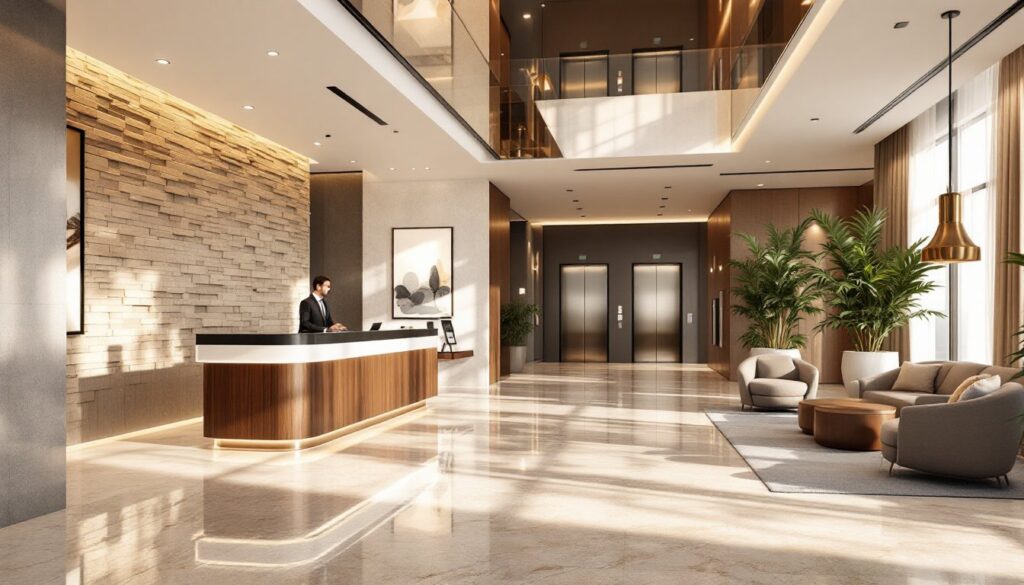
A hotel lobby sets the tone for a guest’s entire stay. Within the first thirty seconds of entering, visitors form lasting impressions based on design elements they may not even consciously notice, the layout, lighting, colors, and materials working together to signal quality, comfort, and hospitality. Modern hotel lobby interior design has evolved far beyond decorative aesthetics: it’s now a strategic tool that influences guest satisfaction, operational efficiency, and brand loyalty. In 2026, successful lobbies balance contemporary style with practical functionality, creating spaces that feel inviting while supporting the day-to-day needs of both guests and staff. This guide explores the essential principles and elements that make hotel lobby design work.
Key Takeaways
- Hotel lobby interior design is a strategic tool that shapes guest impressions within the first 30 seconds and directly influences guest satisfaction, operational efficiency, and brand loyalty.
- Layered lighting combining ambient, task, and accent elements with 2700K-3000K warm tones in social areas and 3500K-4000K neutral tones at service desks is essential for creating inviting and functional spaces.
- Color palettes and durable materials like natural stone, large-format porcelain tiles, and warm woods communicate brand positioning and quality while supporting high-traffic durability requirements.
- Effective hotel lobby interior design establishes distinct functional zones with clear wayfinding, appropriate furniture selection, and integrated technology that guides guest flow without creating disorientation.
- Guests are willing to pay premium rates for standout lobby experiences, making lobby design investments a key differentiator for hotel brands seeking to enhance guest loyalty and repeat business.
- Modern hotel lobbies balance contemporary aesthetics with practical climate control, zone layouts, and invisible operational infrastructure that serve both guest comfort and staff efficiency simultaneously.
The Strategic Role of Lobby Design in Guest Experience
Hotel lobby interior design is far more than decoration, it’s the physical embodiment of a hotel’s brand promise. Guests arriving in a lobby form emotional connections based on how thoughtfully the space has been designed. A well-designed lobby communicates attention to detail, cleanliness, and professionalism before a single staff member greets a visitor.
The lobby serves multiple functions simultaneously. It’s a wayfinding hub where guests orient themselves, check in, and access key services. It’s a social space where guests meet colleagues, make calls, or settle in to work before heading to their rooms. For staff, the lobby is an operational nerve center, front desk personnel need clear sightlines, housekeeping requires efficient traffic patterns, and management benefits from spaces that naturally guide guest flow. When these competing needs are balanced through thoughtful design, the lobby becomes a tool for improving guest satisfaction while streamlining hotel operations.
Research consistently shows that guests are willing to pay premium rates for hotels with standout lobby experiences. A memorable lobby can offset modest room sizes or peripheral locations, turning a stay into an experience guests want to repeat. This is why major hotel brands invest heavily in lobby redesigns every five to ten years, updating materials and layouts to align with evolving expectations and design trends.
Essential Elements of Modern Hotel Lobby Design
Lighting and Ambiance
Lighting is the single most important element in hotel lobby design, yet it’s often underestimated. The goal is to achieve a balance between brightness (for safety and navigation) and warmth (for comfort). Poor lighting makes even an expensive lobby feel depressing: excellent lighting transforms an ordinary space into something memorable.
Layered lighting, combining ambient, task, and accent lighting, creates depth and visual interest. Ambient lighting provides overall illumination and is typically delivered through recessed fixtures or large ceiling-mounted elements. Task lighting illuminates functional areas like the front desk, concierge desk, and seating clusters, where guests need clarity to read, work, or sign documents. Accent lighting highlights architectural features, artwork, or focal points, drawing the eye and creating focal points that anchor the space.
Color temperature matters enormously. 2700K to 3000K (warm white) light feels inviting and residential, ideal for sitting areas and lounge zones. 3500K to 4000K (neutral white) light works well at check-in desks where staff need clarity to process information. Modern LED systems allow programmable adjustments throughout the day, shifting from warmer tones in the evening to brighter, more energizing light in the morning.
Dimmers and smart controls should be invisible to guests but essential to operations. Lobbies with fixed lighting often feel static and impersonal. The ability to subtly adjust light levels in response to time of day, occupancy, and season keeps the space feeling intentional and comfortable.
Color Palettes and Materials
Color palettes in hotel lobbies typically follow one of three strategies: neutral and timeless (warm grays, beiges, soft whites with accent colors), bold and distinctive (saturated jewel tones or deep earth tones that create memorable brand identity), or minimalist and modern (whites, blacks, and cool grays with minimal color saturation).
The choice depends on the hotel’s brand positioning. A luxury resort might use warm neutrals with terracotta, sage, or soft gold accents to evoke relaxation and sophistication. A business-class hotel often employs cool, clean palettes with blues or charcoals to convey professionalism. A boutique property might embrace bold color or unexpected material combinations to signal creativity and personality.
Materials communicate quality more directly than color alone. Natural stone (marble, granite, limestone) conveys luxury and permanence, though it requires regular maintenance and can feel cold without the right lighting and warm adjacent materials. Large-format porcelain tiles offer the look of stone at lower cost and maintenance, with better slip resistance, critical in high-traffic areas. Warm woods (walnut, oak, teak) add richness and are increasingly popular in contemporary designs, often combined with concrete or polished plaster for textural contrast.
Floor materials carry special weight in lobbies due to heavy foot traffic. Durable, attractive flooring like large polished terrazzo, light-colored concrete, or luxury vinyl plank that mimics stone works well. These materials should have textured or matte finishes rather than high gloss, which shows footprints and creates safety hazards on wet surfaces. Wall treatments might include feature walls of natural stone, shiplap, or paint, while ceilings often benefit from texture or soft finishes that absorb sound and reduce the echo common in large open spaces.
Creating Functional Spaces That Feel Welcoming
A functional lobby prioritizes clear zones and intentional sightlines. Guests shouldn’t feel disoriented upon arrival, and staff shouldn’t have to compete with guest traffic to move through the space efficiently. Effective hotel lobby interior design creates distinct areas: a check-in zone (prominent, easy to locate), a lounge or seating area (comfortable and separated from the main flow), a circulation path to elevators (clear and unobstructed), and support areas like restrooms, business centers, or retail spaces (accessible but not visually dominant).
Furniture selection reflects this functional mindset. Seating should be durable, stylish, and arranged to encourage conversation without creating privacy expectations guests won’t find in the rest of the hotel. A mix of seating types, high-backed chairs for semi-privacy, sofas for groups, individual lounge chairs, accommodates different guest needs. Materials must resist staining and frequent cleaning: performance fabrics and leather are industry standards for good reason.
Wayfinding is often invisible when done well and jarring when neglected. Signage should feel integrated into the design rather than applied as an afterthought. Subtle use of color, flooring material changes, or architectural features can guide guests naturally toward elevators, stairs, or key amenities. For properties with complex layouts, thoughtful placement of directory boards prevents guests from wandering confused.
Technology integration is now expected in modern hotel lobbies. Guests anticipate digital check-in kiosks, WiFi that works flawlessly, and perhaps smart displays showing events or services. But, technology should blend seamlessly into the design aesthetic rather than dominating it. A massive television wall or visible networks of wires detracts from the overall experience. Modern hotels increasingly hide technology within design elements or use elegant, minimal hardware that feels intentional rather than corporate.
Climate control often gets overlooked in lobby design, but it’s crucial. Large open lobbies are notoriously difficult to condition, warm areas near entrances contrast sharply with cold zones near the front desk. Thoughtful HVAC design, zone control, and perhaps strategic placement of curtains or screens at entry points helps maintain comfortable conditions throughout.
Conclusion
Hotel lobby interior design in 2026 reflects a shift toward purposeful, guest-centered spaces that balance beauty with function. Success lies in understanding that every element, lighting, color, material, furniture, and layout, works together to shape how guests experience arrival and orientation. Lobbies that feel welcoming while operating efficiently create the foundation for positive guest experiences. Whether designing a new property or refreshing an existing lobby, the principles remain constant: know your brand, invest in quality materials and lighting, design for flow, and never sacrifice function for aesthetics. The best hotel lobbies feel less like designed spaces and more like places guests naturally feel comfortable, the highest compliment any interior design can receive.