
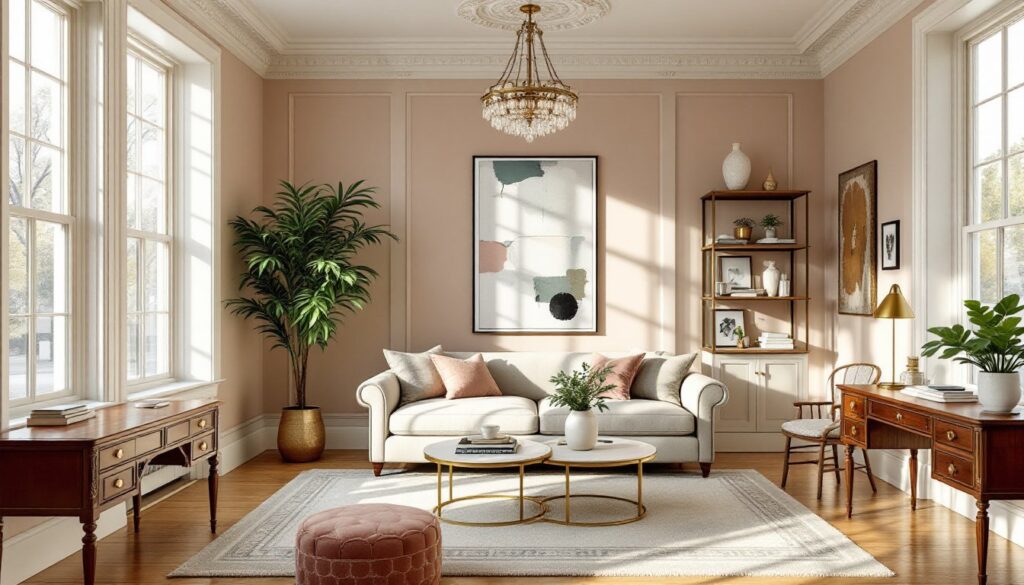
Modern Victorian interior design merges the elegance and ornamentation of the Victorian era with the clean lines and functionality of contemporary style. For homeowners tired of choosing between historical authenticity and modern comfort, this hybrid approach offers the best of both worlds. Unlike pure Victorian design, which can feel heavy with velvet, excessive pattern, and dark wood, modern Victorian strips away ornamental excess while preserving the signature drama, richness, and character that makes the style so enduring. The trend has gained momentum as designers and DIYers recognize that historic charm doesn’t require sacrificing livability, open layouts, or practical storage. Whether you’re renovating a period home or simply craving a more refined aesthetic, modern Victorian design provides a roadmap for creating sophisticated, inviting spaces that feel timeless rather than frozen in time.
Key Takeaways
- Modern Victorian interior design combines Victorian elegance and character with contemporary functionality and clean lines, creating timeless spaces that don’t feel like museum exhibits.
- Effective modern Victorian design uses restrained color palettes with muted jewel tones as accents paired with neutral walls, plus subtle wallcoverings or textured papers instead of overwhelming patterns.
- Mix genuine Victorian and mid-century pieces with contemporary furnishings deliberately, prioritizing quality statement pieces like chandeliers and sofas over filling every space with approximations.
- Respect original architectural features like crown molding and fireplaces in period homes, but don’t hesitate to modify floorplans or add modern conveniences to suit contemporary living standards.
- Invest in quality hardware, lighting, and wall treatments such as brass fixtures, well-chosen chandeliers, and crown molding installation for significant visual impact at manageable costs.
- Build modern Victorian interiors gradually by layering furnishings, artwork, and textiles over time rather than rushing to complete a fully decorated look, allowing authentic personal style to emerge.
What Is Modern Victorian Design?
Modern Victorian design strips the heaviness from classical Victorian interiors while preserving their distinctive character. Rather than wall-to-wall damask wallpaper and carved wood moldings, modern Victorian employs selective ornamentation, maybe an elegant chair rail or picture rail in key spaces, paired with neutral walls and intentional color accents. The style emphasizes quality over quantity: a statement chandelier instead of three, a single gallery wall of vintage prints instead of a chaotic collection, and curated antique or vintage pieces mixed deliberately with contemporary furnishings.
The core philosophy is restraint with purpose. Victorian homes of the 1800s were designed for servants, multiple fireplaces, and disconnected rooms: modern living demands flexibility. Modern Victorian respects proportions and historical details, crown molding, tall baseboards, arched doorways, while eliminating partition walls where possible, introducing efficient storage, and incorporating modern conveniences like updated electrical outlets and climate control seamlessly into the design. The result feels like a Victorian home that got a thoughtful 21st-century update, not a museum exhibit or a parody of the era.
Key Elements of Modern Victorian Interiors
Color Palettes and Wallcoverings
Traditional Victorian spaces lean toward deep jewel tones, emerald, sapphire, burgundy, often in flat or velvet finishes. Modern Victorian moderates this palette. Soft, muted versions of those jewel tones (dusty rose, muted sage, soft charcoal) work beautifully as accent colors on a single wall or in a feature room. Pair these with neutral wall bases, warm whites, soft greens, pale grays, to prevent visual heaviness.
Wallcovering choices matter significantly. Instead of busy, all-over damask or floral patterns, modern Victorian favors subtle, small-scale prints or textured papers. Grasscloth, linen-look wall coverings, and tone-on-tone geometric papers add tactile interest without overwhelming the space. Alternatively, use paint in those muted Victorian colors and introduce pattern through upholstery, artwork, and textiles instead. This approach lets homeowners change accents without the commitment of replacing wallpaper.
Furniture and Fixtures
Modern Victorian furniture blends Victorian silhouettes, rolled arms, turned legs, claw feet, with contemporary upholstery fabrics and proportions. A sofa might have Victorian-style arms but clean, modern lines and performance fabrics suited to family living. Sideboards, secretary desks, and credenzas echo Victorian forms but in lighter woods or painted finishes rather than dark mahogany.
Lighting is a cornerstone of the aesthetic. A crystal or brass chandelier remains iconic, but pair it with dimmer switches and supplementary contemporary pendant lights or table lamps for layered, functional illumination. Hardware, cabinet knobs, door handles, light switch covers, should feel intentional: brass or aged bronze rather than modern chrome, but refined and proportion-appropriate rather than overly ornate.
Texture elevates the space without excess. Velvet accents work beautifully on a single chair or pillow: linen and linen-blend fabrics keep upholstery breathable and livable. Layered rugs, perhaps a larger neutral base with a smaller patterned runner, add depth. Hardwood or wide-plank flooring with area rugs feels more authentic than wall-to-wall carpeting, though a quality neutral broadloom in a bedroom or study can work if it complements the scheme.
Creating Balance Between Historic and Contemporary
The tightrope of modern Victorian design is respecting architectural history while meeting modern needs. If your home has original crown molding, plaster cornices, or parquet floors, these features anchor the style, refinish them thoughtfully rather than removing or obscuring them. But, don’t feel obligated to reproduce every Victorian detail if your home is newer or in poor condition. A well-executed modern interpretation is more honest than a superficial fake-Victorian overlay.
Mix periods and styles deliberately. A Victorian settee paired with a modern abstract artwork, a recessed light fixture set into a traditional plaster ceiling, or contemporary open shelving mounted above a traditional fireplace mantel all signal that this is a living, evolving home, not a historical recreation. Authentic Victorian interiors contained furnishings from multiple periods and price points: modern Victorian honors that eclecticism.
Function drives form. If a Victorian floorplan doesn’t suit your lifestyle, modify it. Open the kitchen to the dining room: add a powder room: install a modern HVAC system discreetly. These choices are far more important to daily satisfaction than whether your wall color historically matches 1880s paint records. The goal is a home that feels Victorian in spirit while accommodating contemporary living standards.
How to Apply Modern Victorian Design to Your Home
Start with what already exists. If you’re working in a period home, document original architectural features, moldings, fireplaces, hardware, floor conditions, before making changes. A professional survey costs little and can prevent costly mistakes. For homes without inherent Victorian character, focus on curated additions: a fireplace accent wall, wainscoting or shiplap in a dining area, or a coffered or beamed ceiling section can establish the aesthetic without overwhelming the whole house.
Begin with a muted neutral palette and layer in one or two accent colors thoughtfully. Jewel-tone accent walls or rich-colored upholstery have impact when surrounded by breathing room. Avoid the common pitfall of applying Victorian color throughout, results look heavy and dated rather than balanced.
Source mixed-period furnishings intentionally. High-street retailers now offer Victorian-inspired pieces at reasonable prices, but prioritize one or two statement pieces, a quality sofa, a vintage dresser, or a statement chandelier, over filling every spot with approximations. Thrift stores, estate sales, and online marketplaces are goldmines for genuine Victorian and mid-century pieces that add authenticity and character. Mix these genuine items with contemporary basics to keep the overall investment manageable.
Pay close attention to wall treatments. Crown molding, picture rails, or a painted accent wall provide significant visual impact for the effort. If original molding is missing, good reproductions exist at home improvement stores: installation is straightforward with basic carpentry skills and miter saw competency. Similarly, wainscoting can be added to existing drywall, a mix of paint grades and a small amount of molding creates visual interest and durability in high-traffic areas.
Hardware and lighting deserve investment. Inexpensive hinges and knobs date quickly: mid-range brass or aged bronze hardware looks appropriate and lasts decades. A quality chandelier or sconce anchors a room’s character. Don’t assume Victorian-style means expensive: contemporary makers offer affordable options alongside luxury pieces.
Finally, don’t rush. Modern Victorian works best when it evolves with your collection of furnishings, artwork, and textiles rather than appearing instantly “decorated.” Patience permits sourcing quality pieces, testing color relationships, and building a truly personal, balanced aesthetic.
Conclusion
Modern Victorian interior design proves that elegance and comfort aren’t mutually exclusive. By honoring the proportions, character, and visual richness of the Victorian era while embracing contemporary functionality and restraint, homeowners create spaces that feel timeless, livable, and distinctly personal. The style isn’t about authenticity to a specific decade, it’s about intention, quality, and balance. Whether you’re starting with a period home or introducing Victorian elements into a contemporary space, the principles remain consistent: pare down ornamentation, layer texture and color carefully, mix periods with purpose, and let your home reflect how you actually live. The result is an interior that honors history without feeling like a museum, marrying elegance with practicality in a way that resonates for years to come.